Peptide batch traceability
Learn how to match peptide vials, orders and COAs by batch number, distinguish report sources and check documentation for current and older orders.
- Sequence Club documentation team
- 12 August 2026
- 9 September 2026

Peptide batch traceability means keeping the product, supplied vial, order record and supporting laboratory reports connected to the same batch identifier. A product name and labelled strength tell you which material you are looking at; they do not identify its production batch.
For anyone comparing research peptides in Bali, the useful question is whether the documentation supports the exact batch being considered. This guide explains how to make that connection, who commissioned the testing and what to check when a catalogue batch changes.
1. Match the vial, order and report
Before ordering, note the product name, labelled strength and full batch number in the product record. Open the supporting laboratory report and compare its submitted-sample and batch details. Keep the report's task number or verification reference with the batch identifier.
When checking a received vial, compare its batch number with the order record and the relevant report. A similar name, matching strength or familiar label design is not enough to connect different batches. If the identifiers differ or a batch number is missing, ask Sequence Club to clarify the connection before relying on that document.
2. Check who commissioned the testing
Sequence Club records distinguish testing commissioned by Sequence Club from testing commissioned by the manufacturing partner. Both can have a published third-party laboratory report. Publishing a supplier's report does not make it a Sequence Club-commissioned test.
Read the laboratory, client and manufacturer fields for their stated roles. The laboratory is the testing organisation; the client and manufacturer entries identify the parties named in the document. Those entries do not, on their own, establish the chain of custody of every vial supplied.
The source of a report and the scope of its findings are different questions. Check the actual analyses reported for the batch; the commissioner's name does not add tests or extend their results to another batch.
Example: a Sequence Club-commissioned batch
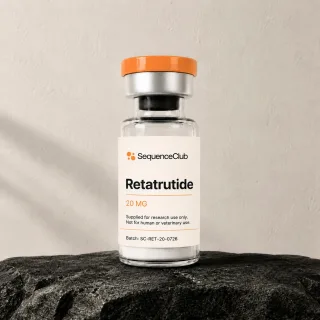
Retatrutide 20 mg batch SC-RET-20-0726 has four Janoshik reports commissioned by Sequence Club. The reports name SequenceClub in the client and manufacturer fields. Keep that original naming and the exact batch identifier when checking the documents.
Task 205008 contains the amount and purity analysis; tasks 205009, 205010 and 205011 cover endotoxin, sterility and heavy metals respectively. Four documents belong to this batch record because different analyses were reported. A report count alone does not describe which tests were performed or how samples were selected.
This example stays attached to SC-RET-20-0726. The product link shows the current catalogue record, which may change when a new batch is introduced.
Example: a manufacturing-partner report
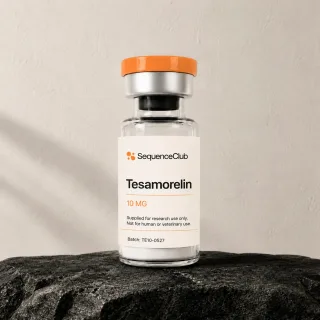
Tesamorelin 10 mg batch TE10-0527 is linked to Janoshik task 171506, commissioned by the manufacturing partner. Sequence Club's batch record lists utherpeptide.com as the report's client and manufacturer, with the submitted-sample name tesa 10mg.
Sequence Club publishes this source report with its supplier commissioning origin retained. It should not be described as a test commissioned by Sequence Club. Match the exact batch and read the original document for the findings it supports.
This example refers to TE10-0527. A later catalogue batch needs its own supporting documentation, even when the product name and labelled strength stay the same.
3. Distinguish published, on-request and pending documents
A published report has an original document you can open and check. Documentation described as available on request needs to be obtained before you can assess it. A pending report does not yet provide a published result you can assess.
These are different documentation states, not claims that every state is currently represented in the catalogue. Both worked examples above have published reports. Check the status on the specific product record rather than applying a general statement to all products.
4. Use the recorded batch for an older order
The catalogue shows the current batch for a product. When reviewing an older order, start with the batch recorded for that order and on the supplied vial. Today's catalogue entry does not establish which batch was supplied previously.
Sequence Club's order-history page displays the stored batch number when one is available. If an older item has no recorded batch, it says so. A missing historical identifier should not be filled in by assuming the current catalogue batch applies.
Reordering is a new order using the product's current batch. Check that batch and its documentation again. If the older report is no longer available through the public library, contact Sequence Club with the order reference and the batch shown on the vial so the relevant record can be checked.
5. Read the findings after making the batch connection
A matching batch identifier establishes which record you are comparing. It does not extend the laboratory's test scope or prove that every vial was individually tested. Read each finding within the submitted sample, method and limits stated in its report.
The COA-reading guide explains how to distinguish identity, measured amount and purity, and how to read additional tests. The Bali supplier guide brings those documentation checks together with ordering and delivery information.
Limits of this guide
- Batch traceability does not extend the scope of the tests stated in a report.
- A current product record does not prove which batch was supplied in an older order unless that order stored the batch number.
- Documentation that is available on request is not the same as a report published online.
- Batch traceability and laboratory findings do not establish suitability for human or animal use. Sequence Club materials are supplied for research use only.