How to read a peptide COA
Learn how to read a peptide Certificate of Analysis: verify the batch, distinguish purity from amount and compare real Retatrutide and GHK-Cu reports.
- Sequence Club documentation team
- 12 August 2026
- 8 September 2026

A peptide Certificate of Analysis, or COA, records laboratory findings for a submitted sample. Read it by matching the product and batch first, opening the original report, then checking each result against the test, units and sample scope.
For anyone comparing research peptides in Bali, a percentage alone is not enough to compare documentation. The checklist below explains what to look for, followed by two examples from published Sequence Club batch records.
1. Match the product and exact batch
Compare the product name, labelled strength and batch identifier on the product record with the submitted-sample details on the report. When checking an order, use the batch recorded for that order and on its vial. A current catalogue batch may be different.
A matching product name is not enough to connect a report to another production batch. If an identifier is missing or does not match, ask for the document that supports the exact batch you are checking.
2. Open and verify the original report
Follow the original laboratory link rather than relying only on a cropped screenshot. For a Janoshik report, compare the task number and verification details with the linked record. Check the named laboratory, client, submitted sample and dates, including when testing was performed.
Verification connects the displayed results to a laboratory document. It does not, by itself, establish the chain of custody of every vial sold under that product name.
3. Separate the sample label from the measured result
The submitted-sample name tells you how the material was labelled for testing. Read the result row to see what the laboratory actually reported. A label such as 20 mg is not the same field as a measured amount in milligrams.
Keep the laboratory's naming and units intact. Where a report distinguishes a compound total from component amounts, read those figures together before comparing them with a product label.
4. Read identity, amount and purity as different findings
Identity concerns which compound the analysis identifies. Read the reported compound and supporting analytical information; a purity percentage alone does not establish identity.
Measured amount describes how much of the reported compound was measured, using the stated units. Purity describes the result of the purity analysis under its method. It does not mean the same thing as the number of milligrams in the sample.
These findings can be reported within the same analysis. They do not always require separate standalone documents. What matters is what the report and its analytical information actually support.
ICH Q2(R2) explains that analytical procedures must be suited to their intended purpose, including identification and quantitative testing. That guidance provides methodological context; citing it does not establish that a particular laboratory or batch is ICH certified.
5. Check the method, units and sampling scope
Look for the requested analysis, reported method or supporting data, units and number of samples. If several values appear, check whether they describe individual vials, repeated measurements or different components. Do not assume those arrangements are interchangeable.
A result shown as less than a stated threshold is not an exact zero. Likewise, a not-detected result must be read within the method's detection limits. If a method, limit or sampling detail needed for your comparison is absent, ask the laboratory or supplier for clarification.
6. Check which additional tests were reported
Endotoxin, sterility and heavy-metals analyses answer different questions from an amount or purity analysis. Look for the relevant result and report reference for each test; a high purity percentage does not supply those missing results.
When a batch has several reports, check each one's sample details, dates and scope. Results for one set of submitted vials should not be assumed to describe every vial in the batch or the sampling used for every other test.
Example: Retatrutide across four reports
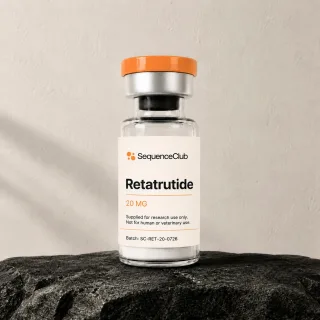
Batch SC-RET-20-0726 is labelled Retatrutide 20 mg. Janoshik task 205008 reports three individual-vial amount results: 23.83 mg, 23.99 mg and 23.85 mg. The corresponding purity results are 99.836%, 99.836% and 99.802%. Keep those individual results visible rather than replacing them with a single figure.
Three other reports cover additional analyses: task 205009 reports endotoxin below 1 EU/vial; task 205010 records TAMC PASS and TYMC PASS under sterility testing; task 205011 reports arsenic, cadmium, lead and mercury as not detected. Read the original documents for their dates and scope. The three-vial comparison in task 205008 does not establish the sampling arrangement for these other tests.
This is an example of the specified batch. Follow the product link to check the current catalogue record before applying the example to a new order.
Example: GHK-Cu total and component amounts
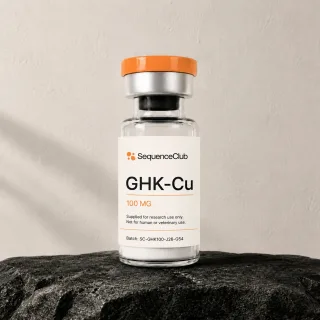
For batch SC-GHK100-J26-G54, labelled GHK-Cu 100 mg, Janoshik task 206299 reports 106.64 mg total, with 88.69 mg GHK content and 17.95 mg copper content. The two components sum to the total: 88.69 + 17.95 = 106.64 mg. They are not additional amounts to add on top of that total.
The same report gives a purity result of 99.909%. That percentage is a different finding from the total and component amounts. This report does not include sterility, endotoxin or heavy-metals results. The figures here remain tied to the named batch, even if the current product record later changes.
Use the checklist when comparing research peptides in Bali
Start with the product's exact batch record and open its supporting reports. Record which findings are published, which documents are available on request and which tests are not reported. This makes the comparison specific to the evidence available for each batch.
The Bali supplier guide covers the next checks, including batch documentation, ordering and delivery information. Sequence Club materials are for research use only, not for human or animal use.
Limits of this guide
- A report describes the submitted sample and the analyses stated in that document.
- Purity alone does not establish identity, measured amount, sterility, endotoxin level or heavy-metals results. Each finding needs its own supporting analytical result.
- A report should not be applied to a different batch number.
- Laboratory findings do not establish suitability for human or animal use.