How HPLC and LC-MS test peptides
Understand HPLC separation, UV peak-area purity and LC-MS mass evidence in peptide testing, including what these methods cannot establish on their own.
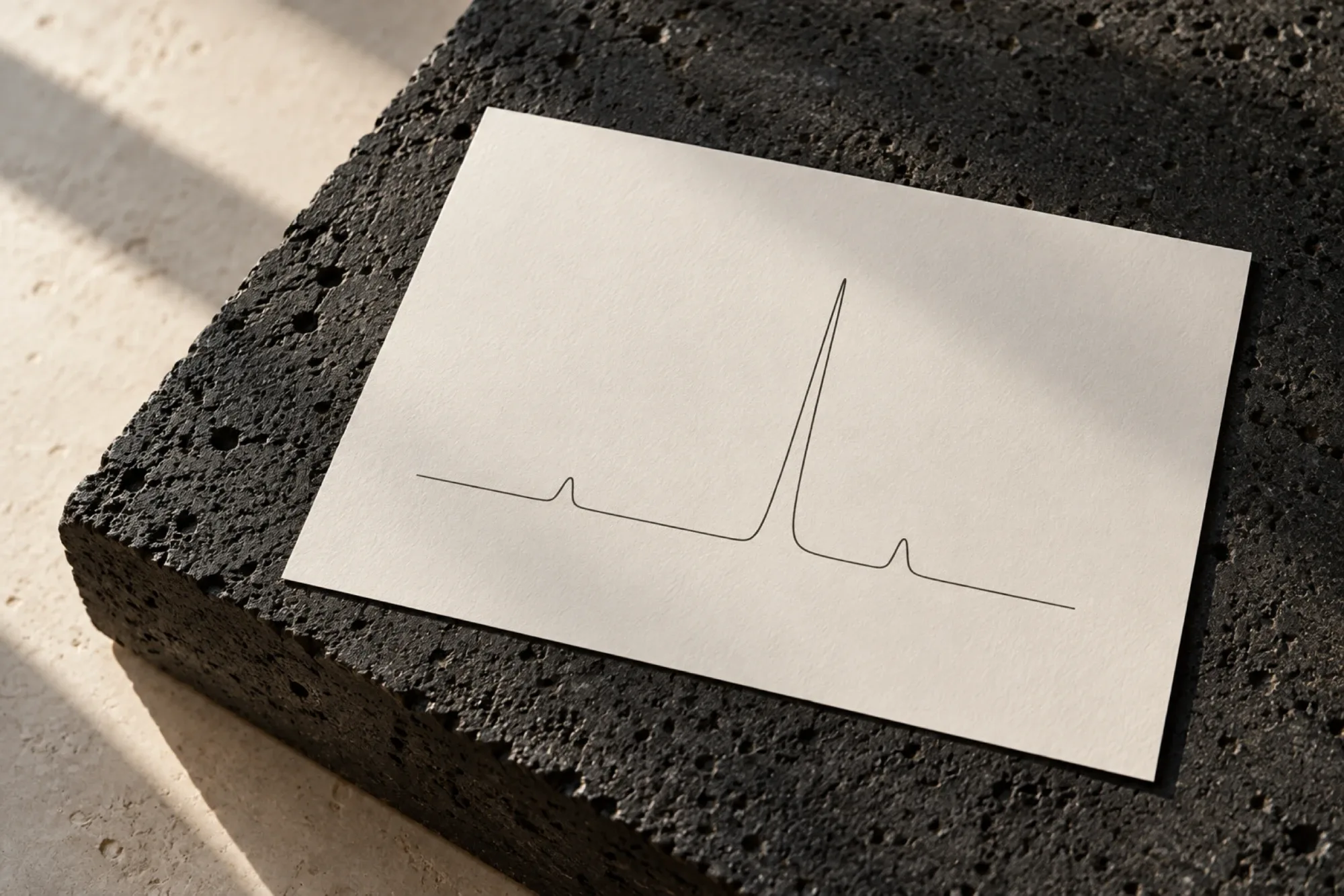
HPLC separates components in a sample. A detector records signals as those components leave the column. LC-MS combines liquid chromatography with mass spectrometry, adding evidence about the mass-to-charge ratios of the detected ions. These techniques can work together; their names alone do not tell you which results a particular laboratory has established.
When reviewing a peptide certificate of analysis (COA), connect each conclusion to its stated method and supporting data. This guide explains the methods. For the product name, exact batch, original report and reported results, use the separate COA-reading checklist.
HPLC separates; the detector measures a signal
HPLC stands for high-performance liquid chromatography. As a sample travels through a column, its components interact differently with the column and the liquid moving through it. Components can therefore reach the detector at different times. The resulting plot of detector response against time is a chromatogram.
In HPLC with ultraviolet detection, the response comes from light absorption at a selected wavelength. A peak's retention time describes when it appeared under those conditions. Retention time is useful evidence, but a peak's position alone is not a complete molecular identification.
A chromatogram also depends on the separation achieved. Components that are not resolved can contribute to the same peak. A large peak should therefore be read alongside the method and any additional identification evidence.
Read an area percentage within its method
Where a laboratory reports purity by peak-area normalisation, the assigned target peak area is compared with the total area included in the calculation. That is a proportion of the integrated detector signal. Read which detector, wavelength and integration rules were used before interpreting the percentage.
A reported area percentage is not automatically the percentage by weight of everything inside the vial. Some components may not produce a useful signal at the selected wavelength, and different substances can have different detector responses. The method defines what the calculation includes.
Ask how peaks were assigned, which peaks were included and whether the method separates relevant impurities. Do not compare two percentages as though they were measured identically when those details are missing.
LC-MS adds mass evidence
In LC-MS, separated material is introduced into a mass spectrometer. The instrument detects ions by their mass-to-charge ratio, often written m/z. A peptide can carry more than one charge, so the displayed m/z value is not always the neutral molecular mass.
Comparing the interpreted mass with the expected mass can support the assignment of a peptide. This complements the chromatographic separation. The report should explain the evidence used for that assignment rather than leaving the reader to infer identity from one unlabeled number.
An intact-mass match is not, by itself, a complete proof of amino-acid sequence or every structural distinction. Different structures can share the same mass. Tandem mass spectrometry, written MS/MS, examines fragment ions and can provide additional structural evidence; do not assume that it was performed when a report only states MS.
Keep purity and peptide amount separate
A purity result and an amount result answer different questions. MilliporeSigma's peptide-analysis explanation distinguishes HPLC purity from peptide content because water, salts and other material can contribute to a sample's total weight without being included in its peptide-purity result.
For a value reported in milligrams, look for the stated quantitative method, calibration or reference basis, and what the number represents. Do not calculate a vial's measured peptide amount from its label and a purity percentage alone.
HPLC and LC-MS can be used in quantitative methods when those methods are designed and supported for that purpose. Their capabilities should not be reduced to a rule that one instrument can only measure purity and another can only identify a compound.
Check what the method was intended to establish
ICH Q2(R2) describes validation in relation to an analytical procedure's intended purpose. Identification, impurity testing and quantitative measurement have different questions to address. The instrument name is only part of that description.
Look for the method reference, the result's units, relevant detection or quantitation limits and the laboratory's stated scope. When a report does not supply a detail needed for your decision, record it as not stated and ask for clarification. Citing ICH guidance does not establish that a particular laboratory, product or batch is ICH certified.
A chromatographic purity or mass result also does not supply separate findings for endotoxin, microbial testing or elemental contaminants. Those conclusions need evidence from the corresponding analyses. Keep the report's actual scope visible.
Keep a short method-evidence record
Use the blank note below to record the original report link, exact batch and each result alongside its stated method. There are separate spaces for the reported finding, supporting evidence and unanswered questions. It is an organisational aid, not a replacement for the laboratory's report or an independent validation of the method.
For research peptide documentation supplied in Bali, apply the same distinction: the original report establishes what was reported for the submitted sample. This general guide does not identify the instruments or methods used for every Sequence Club batch.
Limits of this guide
- This guide explains analytical concepts. It does not independently verify a laboratory method or reinterpret any Sequence Club batch result.
- A method's name does not establish its performance for every peptide, impurity or sample type. Refer to the original laboratory documentation.
- Results apply within the stated method and sampling scope. They do not establish suitability for human or animal use.
- All products are supplied for research use only. Not for human or veterinary use, not for diagnostic or therapeutic application, and not for food or cosmetic use.
Sources
- Waters: Synthetic peptide impurity analysis on reversed-phase columns
- Waters: LC-MS analysis of synthetic peptide impurities
- Thermo Fisher Scientific: Understanding mass spectra
- Agilent: Peptide analysis workflows, pages 7–10 and 13–15
- MilliporeSigma: Peptide sample amount determination
- ICH Q2(R2): Validation of Analytical Procedures